


← Species • Family: Aizoaceae 🐾 Pet-Safe

Bolus's Split Rock (Pleiospilos bolusii)

Pleiospilos bolusii

Bolus's Split Rock (Pleiospilos bolusii)

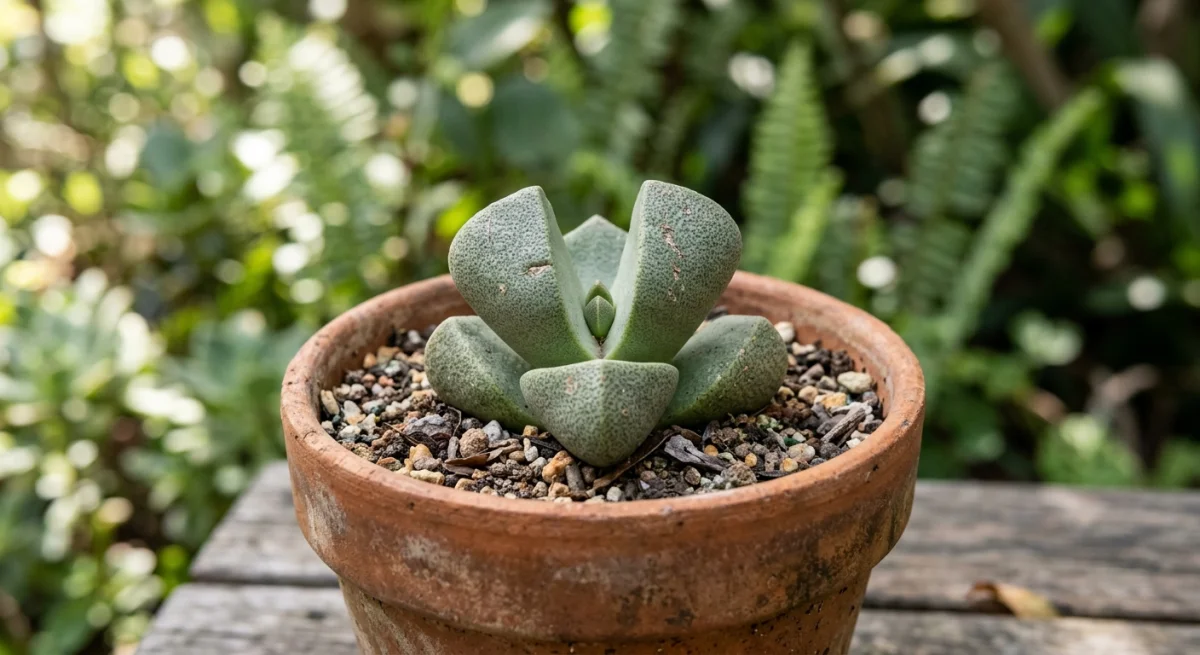
Native to the arid Great Karoo region of South Africa, Pleiospilos bolusii is an exceptional mimicry succulent featuring heavily pitted, brownish-green leaves that resemble fractured rocks. In late summer or autumn, large, golden-yellow daisy-like flowers with a faint coconut fragrance emerge from the central fissure. Its remarkable evolutionary camouflage and sculpted rock-like form make it a prized centerpiece in succulent collections.

📋 Core Botanical Care Parameters

☀️ Light Requirements

Requires full sun to intense direct sunlight for at least 5–6 hours daily. Low light levels cause unnatural elongation (etiolation) and weaken the plant.

💧 Watering Frequency

Follow a strict soak-and-dry protocol only during spring and autumn growth flushes. Never water while older leaf pairs are still plump and being absorbed; keep completely dry during winter and peak summer dormancy.

🏺 Soil Mix

80% pumice, crushed lava, and coarse silica grit + 20% organic cactus-succulent compost.

❄️ Cold Tolerance

-2°C (USDA Zone 9b) - Tolerates brief light frosts only if maintained bone dry; protect from freezing wet conditions.

🌱 Propagation Method

Seed sowing in spring (primary and most reliable method) or careful division of multi-headed mature clumps.

🐾 Pet Safety

This plant is non-toxic to cats and dogs and safe for pet-friendly homes.

Advertisement
💧

Smart Succulent Watering Calculator

Get a personalized watering schedule based on your plant species, pot, and season:

Botanical Algorithm v2.0
🎯 Recommended Watering Cycle Tailored for your plant
Every 8 - 10 Days

• Dynamically optimized for your pot and climate

Compatible with Google, Apple & Outlook Calendar
🚿
Watering Method: Bottom Watering (Immersion)
⚠️
Golden Rule:

Never water until at least 80% of soil is completely dry!

🌿 Related Succulent & Cactus Species

All Species Profiles →
Living Stones (Lithops aucampiae) 🐾 Pet-Safe Aizoaceae
Lithops aucampiae

Living Stones (Lithops aucampiae)

Masters of disguise that mimic pebbles in southern African deserts. Needs watering only a few times a year.

❄️ 5°C (Down to 0°C if bone d… Inspect →
Bunny Succulent (Monilaria moniliformis) 🐾 Pet-Safe Aizoaceae
Monilaria moniliformis

Bunny Succulent (Monilaria moniliformis)

Native to the arid Succulent Karoo biome of South Africa, this deciduous dwarf shrub is celebrated for its juvenile leaf pairs that vividly mimic bunny ears. The sparkling foliage is densely covered in specialized, water-storing epidermal bladder cells that glisten under sunlight. The segmented stems resemble strings of beads, and the plant enters an obligatory summer dormancy where it sheds its leaves to endure extreme drought.

❄️ +2°C (USDA Zone 10b) Inspect →
Living Pebble (Conophytum bilobum) 🐾 Pet-Safe Aizoaceae
Conophytum bilobum

Living Pebble (Conophytum bilobum)

Native to the Namaqualand region of South Africa, Conophytum bilobum is an iconic miniature succulent characterized by fleshy, paired leaves fused at the base with distinct bilobed tips resembling rabbit ears. As a winter-grower, it produces cheerful golden-yellow diurnal flowers in autumn directly from the central fissure. During the intense summer heat, it enters an obligate dormancy, sheathing itself in paper-dry outer skin to shield the emergent inner bodies.

❄️ -2°C (USDA Zone 9b), requi… Inspect →
Advertisement

📖 Related Botanical Care Guides

All Care Guides →
Living Stone Plant (Dinteranthus microspermus) Diseases: Leaf Splitting, Root Rot & Rescue Guide Troubleshooting & Pests 11 min read
03 Nov 2026 • Rıfat Özkan Rıfat Özkan

Living Stone Plant (Dinteranthus microspermus) Diseases: Leaf Splitting, Root Rot & Rescue Guide

Resembling delicate quartzite pebbles, Dinteranthus microspermus succulents are highly vulnerable to epidermal cracking, hypocotyl rot, and fungal collapse under improper cultivation. Learn the physiological causes behind cellular bursting and master step-by-step horticultural rescue protocols to bring your living stone back to life.

Advertisement
Member Member Member Rıfat Özkan
Growing Together with 12,000+ Plant Lovers

Weekly Succulent Newsletter

Receive expert plant tips, watering schedules, and rare species care straight to your inbox.

🔒 Zero Spam • Once weekly digest • Unsubscribe with one click anytime.

🌱
Botanical Tip of the Day Verified Botanical Fact

Wait until soil is completely dry: Succulents perish from overwatering, rarely from drought! 🌿
