


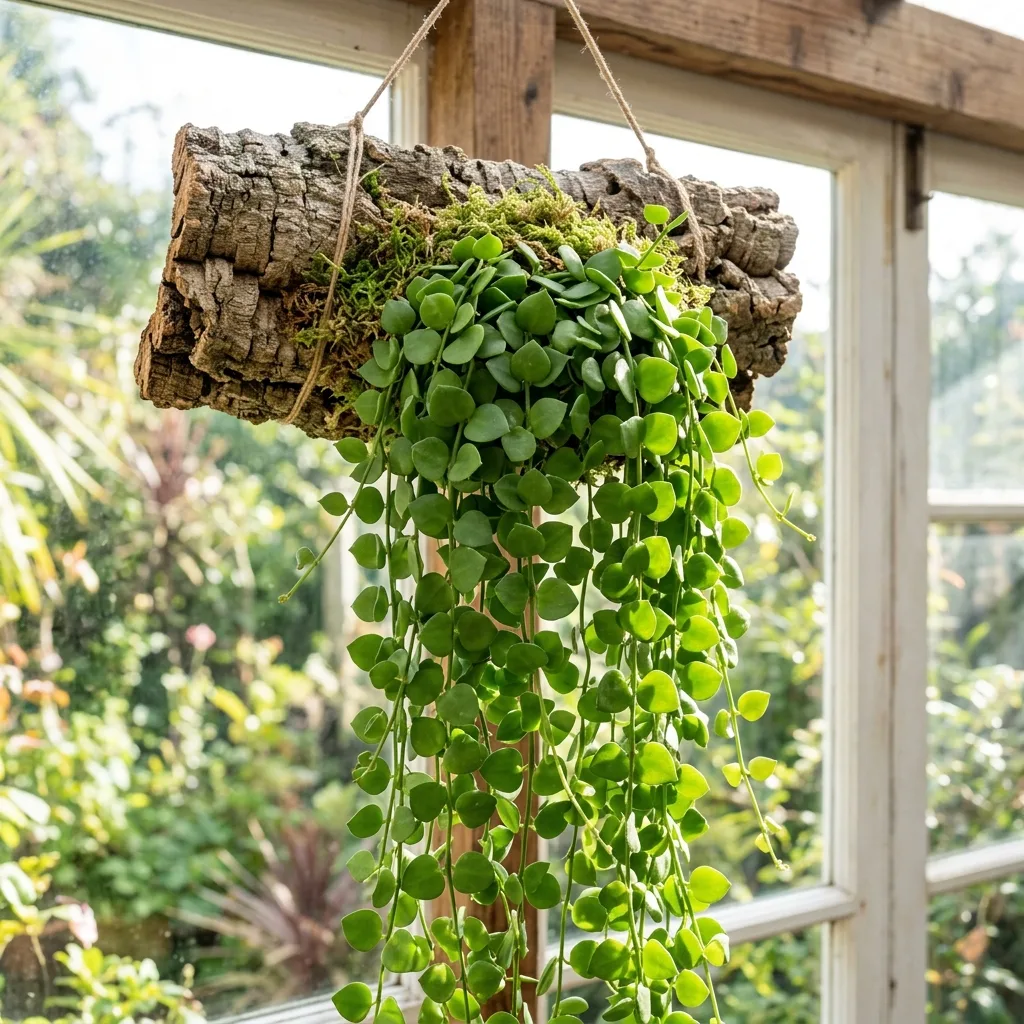
← Species • Family: Apocynaceae 🐾 Pet-Safe

Kangaroo Pocket Plant (Dischidia vidalii)

Dischidia vidalii

Kangaroo Pocket Plant (Dischidia vidalii)

Native to the rainforests of the Philippines, this fascinating epiphytic climber is a myrmecophytic succulent renowned for its mutualistic symbiosis with arboreal ants. In addition to small, standard photosynthetic leaves, it develops remarkable hollow, pouch-like modified leaves (ascidia) that serve as nesting chambers for ants. Internal adventitious roots grow directly inside these protective cavities to absorb nutrients and moisture from ant debris.

📋 Core Botanical Care Parameters

☀️ Light Requirements

Bright filtered or indirect light; avoid harsh midday direct sun which scorches foliage, though gentle early morning sun is tolerated.

💧 Watering Frequency

Allow the epiphytic medium to dry slightly between waterings; avoid soggy substrates, reduce in winter, and maintain high humidity (60%+).

🏺 Soil Mix

%40 Fine Orchid Bark + %30 Sphagnum Moss + %20 Pumice or Perlite + %10 Horticultural Charcoal

❄️ Cold Tolerance

+10°C (USDA Zone 11)

🌱 Propagation Method

Stem cuttings with nodes rooted in moist sphagnum moss or perlite under high humidity; layering.

🐾 Pet Safety

This plant is non-toxic to cats and dogs and safe for pet-friendly homes.

Advertisement
💧

Smart Succulent Watering Calculator

Get a personalized watering schedule based on your plant species, pot, and season:

Botanical Algorithm v2.0
🎯 Recommended Watering Cycle Tailored for your plant
Every 8 - 10 Days

• Dynamically optimized for your pot and climate

Compatible with Google, Apple & Outlook Calendar
🚿
Watering Method: Bottom Watering (Immersion)
⚠️
Golden Rule:

Never water until at least 80% of soil is completely dry!

🌿 Related Succulent & Cactus Species

All Species Profiles →
Desert Rose (Adenium obesum) ⚠️ Toxic to Pets Apocynaceae
Adenium obesum

Desert Rose (Adenium obesum)

Native to the arid regions of the Sahel and East Africa, Adenium obesum is a pachycaul deciduous succulent shrub renowned for its sculptured basal caudex. Prized in bonsai cultivation, it produces striking tubular flowers ranging from deep crimson to soft pink alongside thick, spirally arranged leaves. All vegetative parts secrete a highly toxic milky latex rich in cardiac glycosides.

❄️ 10°C / 50°F (USDA Zone 11 Inspect →
Sweetheart Plant (Hoya kerrii) 🐾 Pet-Safe Apocynaceae
Hoya kerrii

Sweetheart Plant (Hoya kerrii)

Native to Southeast Asia, Hoya kerrii is a climbing, semi-succulent epiphyte instantly recognized by its obcordate, thick, and heart-shaped foliage. Frequently marketed as a single rooted heart-shaped leaf, it requires a stem node to establish vigorous vine-like vegetative growth. In mature specimens, it produces hemispherical umbels of velvety, star-shaped cream flowers that exude distinctive rust-red nectar droplets.

❄️ 10°C (USDA Zone 11) Inspect →
Giant Starfish Flower / Zulu Giant (Stapelia gigantea) 🐾 Pet-Safe Apocynaceae
Stapelia gigantea

Giant Starfish Flower / Zulu Giant (Stapelia gigantea)

Native to southeastern Africa, Stapelia gigantea is renowned for its spineless, velvety, four-angled stems and astonishing starfish-shaped blooms that can span up to 40 cm across. Emitting a faint carrion scent to attract dipteran pollinators, this striking succulent features creamy-yellow petals intricately patterned with transverse crimson lines and fringed with soft hairs.

❄️ 5°C (USDA Zone 10b - 11) Inspect →
Advertisement

📖 Related Botanical Care Guides

All Care Guides →
Dischidia Care Guide: Epiphytic Bark Mounting and Humidity Protocols Care Guides 8 min read
21 Oct 2026 • Rıfat Özkan Rıfat Özkan

Dischidia Care Guide: Epiphytic Bark Mounting and Humidity Protocols

Native to the canopy branches of Southeast Asian rainforests, the genus Dischidia possesses a root and foliage physiology fundamentally distinct from standard desert succulents. In this comprehensive guide, discover the epiphytic nature, aerial root architecture, lime-free hydration rhythms, and rot-prevention protocols for popular varieties like Dischidia pectenoides and Million Hearts (Dischidia ruscifolia).

Safe Succulent Seed Swapping and Germination Guide: Biosafety, Hygienic Packaging, and Propagation Protocol Propagation Methods 9 min read
22 Nov 2026 • Rıfat Özkan Rıfat Özkan

Safe Succulent Seed Swapping and Germination Guide: Biosafety, Hygienic Packaging, and Propagation Protocol

Seed swapping is the most rewarding way to safeguard succulent biodiversity, yet it requires rigorous biosecurity to prevent spreading viral and fungal pathogens. From contactless swapping and seed surface disinfection to tailored mineral germination substrates and seedling acclimation stages, this comprehensive botanical guide walks you through every step of successful sexual propagation.

Spiral Tower Succulent (Astroloba herrei): Complete Care & Botanical Guide Succulent Varieties 11 min read
22 Nov 2026 • Rıfat Özkan Rıfat Özkan

Spiral Tower Succulent (Astroloba herrei): Complete Care & Botanical Guide

Native to the arid Karoo basins of South Africa, Astroloba herrei—known to collectors as the Spiral Tower Succulent—enchants with its precise five-ranked geometric architecture and exceptional resilience. In this comprehensive botanical guide, explore its native habitat requirements, mineral-rich soil formulations, seasonal watering disciplines, and propagation secrets.

Advertisement
Member Member Member Rıfat Özkan
Growing Together with 12,000+ Plant Lovers

Weekly Succulent Newsletter

Receive expert plant tips, watering schedules, and rare species care straight to your inbox.

🔒 Zero Spam • Once weekly digest • Unsubscribe with one click anytime.

🌱
Botanical Tip of the Day Verified Botanical Fact

When propagating leaves, keep them on dry soil and mist lightly only once roots emerge. 🌱