




A-Z Succulent & Cacti Species Encyclopedia
Detailed botanical ID sheets: light, watering, soil, and pet toxicity.
 🐾 Pet-Safe
Cactaceae
Blue Turk's Cap Cactus (Melocactus azureus)
Endemic to Bahia, Brazil, Melocactus azureus is an extraordinary solitary cactus celebrated for its intensely glaucous, chalky-blue epidermis. Upon reaching reproductive maturity, its vegetative body ceases expansion, giving rise to a prominent, bristly cephalium of reddish-brown setae and creamy wool atop the stem. Prized for its vibrant chromatic contrast, it produces small magenta flowers and bright pink berries directly from the mature cap.
 ⚠️ Toxic to Pets
Passifloraceae
Blue-green Passion Caudex (Adenia glauca)
Native to South Africa and Botswana, Adenia glauca forms a striking, smooth yellowish-green swollen caudex that serves as a subterranean and above-ground water reservoir. Climbing vine-like stems ascend from the apex, displaying deeply lobed, glaucous blue-green foliage with a waxy bloom. This dioecious pachycaul passionflower relative is celebrated worldwide for its architectural silhouette and distinct coloration.
 🐾 Pet-Safe
Crassulaceae
Bluff Lettuce (Dudleya farinosa)
Native to the windswept coastal sea bluffs of Oregon and Northern California, Dudleya farinosa forms dramatic rosettes blanketed in a dense, chalky white epicuticular wax (farina) that reflects harsh sunlight and deflects ocean spray. A winter-active grower adapted to Mediterranean coastal microclimates, it thrives when planted on an angle to mimic natural rock crevices. It is notoriously susceptible to crown rot if moisture settles in the central apical meristem during its summer dormancy.
 🐾 Pet-Safe
Cactaceae
Boat-shaped Living Rock (Ariocarpus scaphirostris)
Endemic to Nuevo León, Mexico, Ariocarpus scaphirostris is an extraordinarily rare geophytic dwarf cactus that grows almost entirely submerged in native limestone gravel. It is characterized by slender, keeled, boat-shaped dark olive to brownish tubercles anchored by a massive napiform taproot. In late autumn, it produces vibrant, brilliant magenta flowers that contrast dramatically with its cryptic, rock-like body.
 🐾 Pet-Safe
Asphodelaceae
Bolus's Haworthia (Haworthia bolusii)
Haworthia bolusii forms a delicate, spherical stemless rosette renowned for the soft, translucent bristles lining its leaf margins like a fine lace or spiderweb. The light green, semi-translucent leaves curve inward during dry periods, using their intricate fringe to diffuse harsh sunlight and conserve vital moisture. It is a slow-growing South African gem highly prized by succulent connoisseurs.
 🐾 Pet-Safe
Aizoaceae
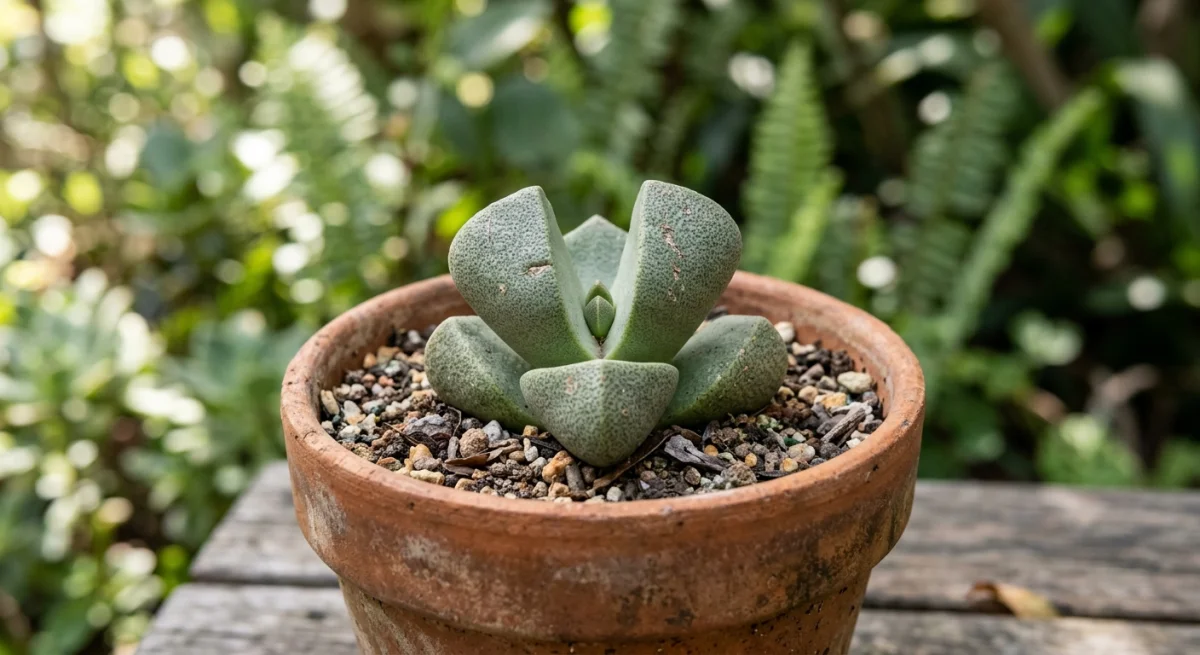
Bolus's Split Rock (Pleiospilos bolusii)
Native to the arid Great Karoo region of South Africa, Pleiospilos bolusii is an exceptional mimicry succulent featuring heavily pitted, brownish-green leaves that resemble fractured rocks. In late summer or autumn, large, golden-yellow daisy-like flowers with a faint coconut fragrance emerge from the central fissure. Its remarkable evolutionary camouflage and sculpted rock-like form make it a prized centerpiece in succulent collections.
 🐾 Pet-Safe
Aizoaceae
Bonsai Mesemb (Mestoklema arboriforme)
Mestoklema arboriforme is a unique caudiciform succulent shrub native to arid South Africa and Namibia, naturally developing a picturesque bonsai-like silhouette. It bears slender, cylindrical succulent leaves and produces an abundance of copper-orange to amber daisy-like flowers during the warmer months. With age, its swollen tuberous roots can be lifted above the soil line to showcase an impressive, gnarled caudex.
 🐾 Pet-Safe
Fouquieriaceae
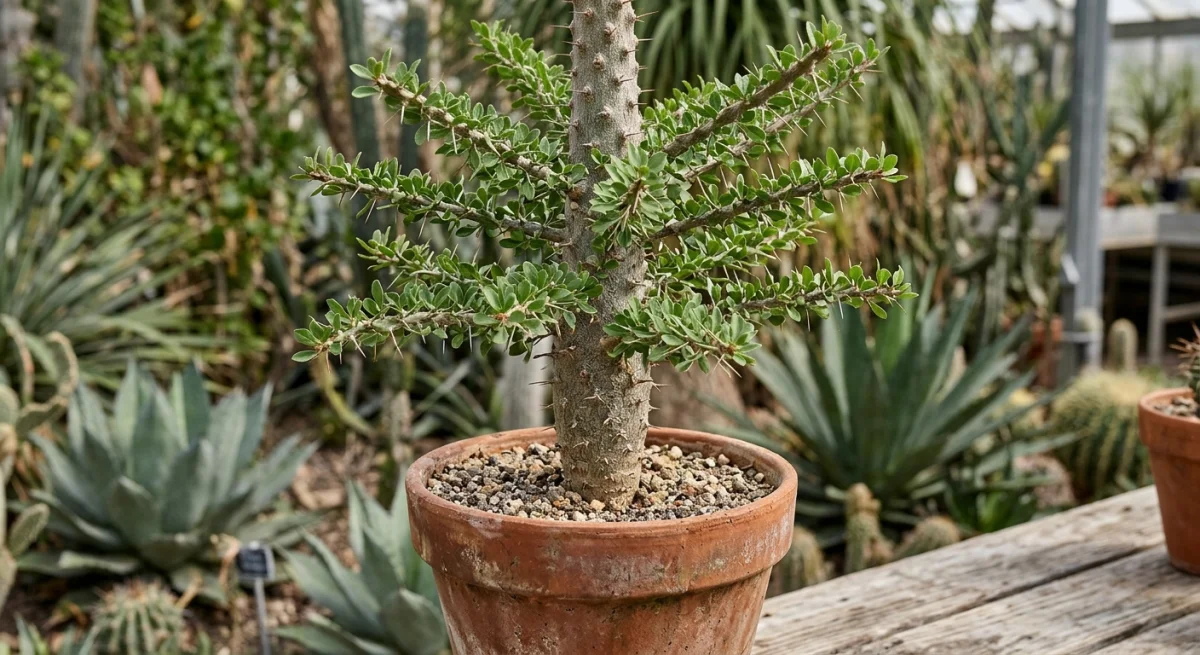
Boojum Tree (Fouquieria columnaris)
Endemic to the Baja California peninsula, Fouquieria columnaris is an iconic pachycaul succulent resembling a massive, tapering inverted carrot or an otherworldly candle. This extremely slow-growing architectural curiosity features a thick, water-storing trunk adorned with short spiny branchlets that flush with small leaves following rain. Mature specimens often develop eccentric, twisting crowns crowned by fragrant, cream-yellow floral panicles.
 ⚠️ Toxic to Pets
Asphodelaceae
Book Aloe (Aloe suprafoliata)
Renowned for its distinctive juvenile phase where glaucous, blue-grey leaves stack in two opposite vertical rows like the open pages of a book. As the plant reaches maturity, the foliage gradually twists into an impressive spiraled rosette. In midwinter, mature specimens produce dramatic unbranched racemes of tubular, silver-pink to scarlet-red flowers.
No succulent or cactus species found matching your criteria.
Try searching with different keywords or reset the filter.


