




A-Z Succulent & Cacti Species Encyclopedia
Detailed botanical ID sheets: light, watering, soil, and pet toxicity.
 🐾 Pet-Safe
Asphodelaceae
Bayer's Haworthia (Haworthia bayeri)
Endemic to the Little Karoo region of South Africa, Haworthia bayeri is an exquisite, slow-growing collector's gem renowned for its flattened, truncated leaf tips. The deep green to blackish-brown rosettes display translucent leaf windows patterned with intricate, pale reticulate venation that channels sunlight down to photosynthetic tissue. In habitat, it grows flush with the soil surface as a supreme morphological adaptation against arid extremes.
 ⚠️ Toxic to Pets
Asparagaceae
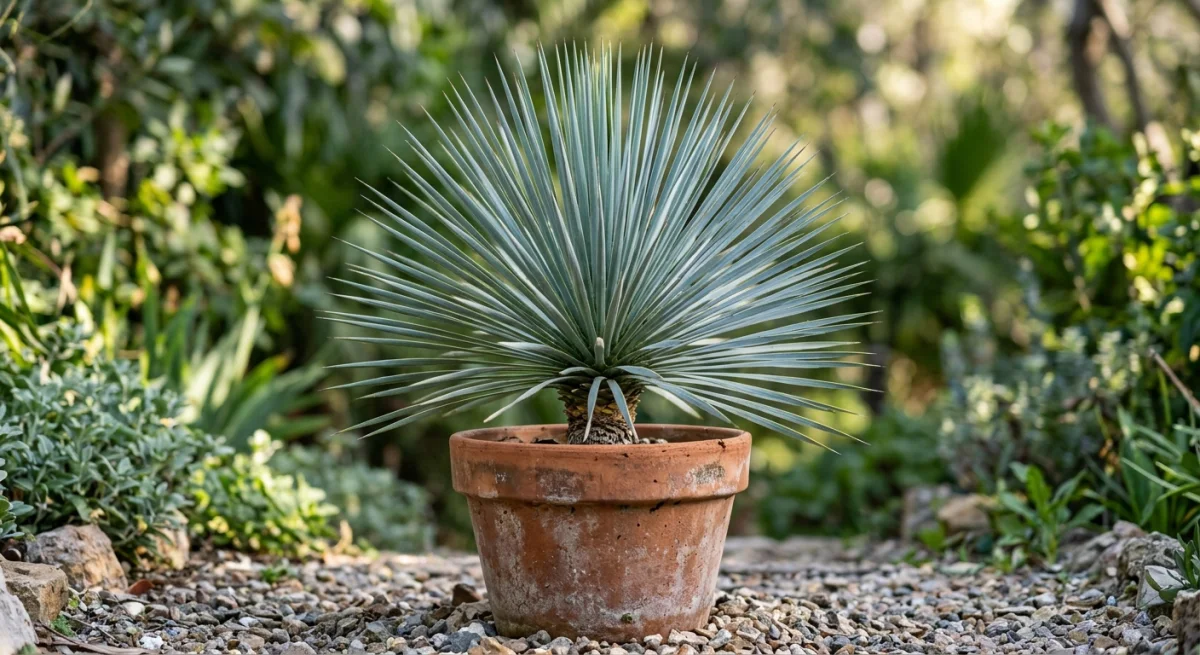
Beaked Yucca (Yucca rostrata)
Native to the arid canyons of West Texas and Northern Mexico, Yucca rostrata is an architectural, arborescent succulent that forms an upright trunk crowned by a breathtaking, spherical rosette. Its hundreds of slender, flexible, powder-blue leaves create an ethereal geometric sphere in arid garden landscapes. It is celebrated globally for its sculptural presence, extreme drought tolerance, and exceptional cold hardiness.
 ⚠️ Toxic to Pets
Crassulaceae
Bear's Paw (Cotyledon tomentosa)
Native to South Africa, Cotyledon tomentosa is a charming, shrubby succulent recognized by its plump, velvety-tomentose leaves with reddish-brown apical teeth that resemble a bear's claws. It exhibits active vegetative growth during the cooler transitions of spring and autumn, often resting during extreme summer heat. When provided with optimal light, it produces striking pendulous, bell-shaped orange-to-red flowers.
 ⚠️ Toxic to Pets
Crassulaceae
Bearded Crassula (Crassula barbata)
Native to the arid Karoo region of South Africa, Crassula barbata is an exquisite miniature succulent distinguished by a dense fringe of long, white cilia along its leaf margins. It forms tightly spiraled, symmetrical rosettes that are monocarpic, meaning the flowering rosette dies after producing an erect spike of tiny white flowers while leaving basal offsets. Its dramatic bearded appearance provides vital shade and moisture capture in its native habitat.
 🐾 Pet-Safe
Crassulaceae
Beautiful Graptopetalum (Graptopetalum bellum / Tacitus bellus)
Native to sheer cliff faces in Chihuahua and Sonora, Mexico, this remarkable succulent forms nearly stemless, flat rosettes of triangular grayish-green leaves. It is renowned for having the most spectacular flowers in the Crassulaceae family, producing brilliant star-shaped magenta blossoms on tall cymes in late spring. A cool, dry winter rest period is strictly required to initiate its prolific flowering display.
 ⚠️ Toxic to Pets
Cucurbitaceae
Bigfoot Caudex (Gerrardanthus macrorhizus)
Native to southern Africa, Gerrardanthus macrorhizus produces an extraordinary, dome-shaped, granite-textured caudex that can exceed a meter in diameter. From this massive moisture-storing base, slender annual climbing vines adorned with ivy-shaped foliage emerge each spring, creating a striking sculptural contrast.
 🐾 Pet-Safe
Cactaceae
Bird's Nest Cactus (Eriosyce senilis)
Endemic to the arid valleys of Chile, Eriosyce senilis is distinguished by a dense, tangled cage of curved, flexible spines that resemble an intricate bird's nest. In late winter to early spring, striking carmine to magenta flowers emerge through the chaotic spines, creating a spectacular visual contrast. Its substantial taproot requires uncompromisingly porous mineral soils and careful moisture management.
 🐾 Pet-Safe
Cactaceae
Bishop's Cap Cactus (Astrophytum myriostigma)
Native to the highland deserts of northeastern and central Mexico, Astrophytum myriostigma is iconic for its spineless, star-shaped stem typically composed of five prominent ribs resembling a bishop's mitre. The epidermis is intricately adorned with tiny white tufts of hair (trichomes) that provide photoprotection against intense solar radiation. In midsummer, mature specimens produce lustrous, silky yellow flowers emerging from the central apex.
 🐾 Pet-Safe
Apocynaceae
Black Bells (Stapelia leendertziae)
Native to South Africa, this remarkable stapeliad distinguishes itself with deep cup- or bell-shaped, velvety dark burgundy-to-black flowers rather than the usual flat star shape. The plant forms sprawling clusters of velvety, four-angled green stems that readily root along the ground. Its dramatic blooms emit a carrion-like scent evolved specifically to attract pollinating blowflies.
No succulent or cactus species found matching your criteria.
Try searching with different keywords or reset the filter.


