






Hailing from the nutrient-rich scrublands and forest edges of tropical Sub-Saharan Africa, the revered Bitter Leaf (Vernonia amygdalina) has captured the fascination of passionate plant collectors and ethnobotanists alike. Famed for its dense reservoir of bioactive compounds and formidable structural resilience, this perennial shrub rewards thoughtful cultivation with vigorous growth and verdant foliage. In this comprehensive masterclass, we will delve into the cellular physiology, optimal substrate architecture, common physiological stress markers, and non-toxic recovery protocols necessary to cultivate a flourishing specimen in your own botanical haven.
Botanical Profile and Physiological Identity of Vernonia amygdalina
Belonging to the Asteraceae family, Vernonia amygdalina is a fast-growing, woody shrub that can reach heights of 2 to 5 meters in naturalized equatorial conditions, though containerized specimens remain easily manageable between 1 and 2 meters. The leaves are elliptical, dark green, and lightly pubescent on their abaxial surfaces, equipped with glandular trichomes that produce bitter sesquiterpene lactones and steroid glycosides. These secondary metabolites serve as an evolutionary defense mechanism against herbivory while underpinning the species' celebrated status in traditional wellness practices.
Understanding the cellular hydration and photosynthetic behavior of Vernonia is crucial for indoor and temperate outdoor cultivation. While desert succulents rely heavily on Crassulacean Acid Metabolism (CAM) and thick cuticular wax (farina) to lock in moisture, Vernonia amygdalina operates via standard C3 photosynthesis with high transpiration rates during warm, bright intervals. Consequently, balancing cellular turgor without inducing root-zone hypoxia is the central art of Bitter Leaf maintenance.
Substrate Architecture: Porosity, Drainage, and Organic Balance
Despite its adaptability across diverse tropical soils, Bitter Leaf demands a well-aerated, structurally stable potting medium when cultivated in containers. Dense, compacted soils invariably lead to oxygen starvation at the root hair level, setting off cascades of chlorosis and adventitious root death. At Sukulentler.com, our horticultural trials recommend an open, organic-rich yet freely draining potting blend:
- 40% High-Grade Coco Coir or Peat Moss: Provides structural moisture retention without suffocating fine feeder roots.
- 30% Horticultural Perlite or Pumice (2–5 mm): Ensures continuous gas exchange within the root rhizosphere.
- 20% Well-Aged Worm Castings or Decomposed Leaf Mold: Imparts steady, slow-release micro and macronutrients, fostering beneficial mycorrhizal colonies.
- 10% Coarse Horticultural Sand or Crushed Lava Grit: Enhances bulk density and capillary drainage at the base of the container.
Aim for a slightly acidic to neutral substrate pH between 6.0 and 6.8. A neutral to mildly acidic environment maximizes the bioavailability of iron, magnesium, and phosphorus, preserving vibrant leaf pigmentation and robust lignification in developing stems.

Luminance and Thermal Parameters
To power its high metabolic rate, Vernonia amygdalina demands abundant solar radiation. It thrives best in full sun to partial afternoon shade. When growing indoors, position the plant directly adjacent to an unshaded south- or west-facing window, ensuring it receives a minimum of 6 to 8 hours of unfiltered or lightly filtered light daily. If ambient natural light falls below 400 foot-candles during shorter winter days, supplement with full-spectrum LED horticultural grow lights positioned 30 cm above the canopy for 12 to 14 hours per day.
Thermally, Bitter Leaf is unequivocally cold-sensitive. The plant maintains active cell division between 20°C and 32°C (68°F–90°F). Sustained temperatures below 12°C (54°F) trigger physiological dormancy, manifested by spontaneous foliar abscission and reduced vascular translocation. Absolute frost will destroy vegetative tissue entirely; therefore, specimens must be transitioned indoors well before autumn night temperatures dip into single digits.
Irrigation Dynamics and Hydraulic Balance
Mastering the moisture profile of Vernonia amygdalina requires abandoning rigid calendar-based watering routines in favor of empirical tactile assessment. While drought-hardy once well-established in the ground, potted specimens exhibit rapid loss of foliar turgor when the root zone dries out completely. Conversely, perpetual saturation fosters an anaerobic environment ideal for pathogenic water molds such as Phytophthora and Pythium.
The Soak-and-Check Protocol: Insert a wooden moisture probe or your finger 5 to 7 cm into the potting substrate. When the upper 30–40% of the soil profile feels dry to the touch and the pot feels noticeably lighter, irrigate deeply with tepid, dechlorinated water until moisture flows freely from the drainage apertures. Discard any runoff accumulated in the saucer after 15 minutes.
Diagnosing Foliar Chlorosis and Systemic Imbalances
Foliar abnormalities provide direct diagnostic windows into your plant's internal cellular state. Learn to distinguish between physiological and nutritional distress markers:
| Visual Symptom | Primary Underlying Cause | Corrective Action Plan |
|---|---|---|
| Interveinal chlorosis on new growth | Iron or manganese deficiency caused by alkaline substrate pH (>7.2) | Top-dress with sulfur or flush substrate with acidified rainwater; apply chelated iron foliar spray. |
| Generalized yellowing of basal leaves | Nitrogen depletion or persistent root asphyxiation from waterlogging | Adjust watering frequency; supplement with balanced organic liquid emulsion high in organic nitrogen. |
| Curling leaf margins with necrotic edges | Substrate salt accumulation from synthetic fertilizers or severe humidity drops | Leach pot thoroughly with distilled water; maintain ambient relative humidity above 50%. |
| Sudden leaf drop without discoloration | Thermal shock or exposure to cold air drafts from doorways/HVAC vents | Relocate to a stable microclimate with uniform temperatures above 18°C. |
Integrated Pest Management: Combating Mealybugs and Foliar Pests
While the intrinsic bitterness of Vernonia repels many generic leaf-chewing insects, opportunistic sap-suckers like mealybugs (Pseudococcidae), spider mites (Tetranychidae), and whiteflies can occasionally establish colonies on tender shoot tips and leaf axils. Rather than reaching for harsh systemic chemical insecticides that could contaminate plants intended for tea or culinary infusions, rely on an organic, multi-tiered botanical protocol:
- Manual Mechanical Disruption: Dip a sterile cotton swab in 70% isopropyl alcohol and apply directly to visible mealybug clusters. The alcohol dissolves their protective white filamentous wax coat, desiccating the insects instantly.
- Cold-Pressed Horticultural Neem & Castile Oil Spray: Emulsify 5 ml of pure, unrefined cold-pressed neem oil and 2 ml of organic liquid Castile soap in 1 liter of warm distilled water. Spray the entire plant thoroughly at dusk, paying deliberate attention to abaxial leaf undersides and nodal junctures. Repeat every 5 to 7 days for three consecutive cycles to eliminate newly hatched nymphs.
- Canopy Hygiene: Periodically mist and wipe down broad leaves with a soft damp cloth to deter dust-loving mites and maintain unrestricted stomatal respiration.
Vegetative Propagation: Stem Cuttings Protocol
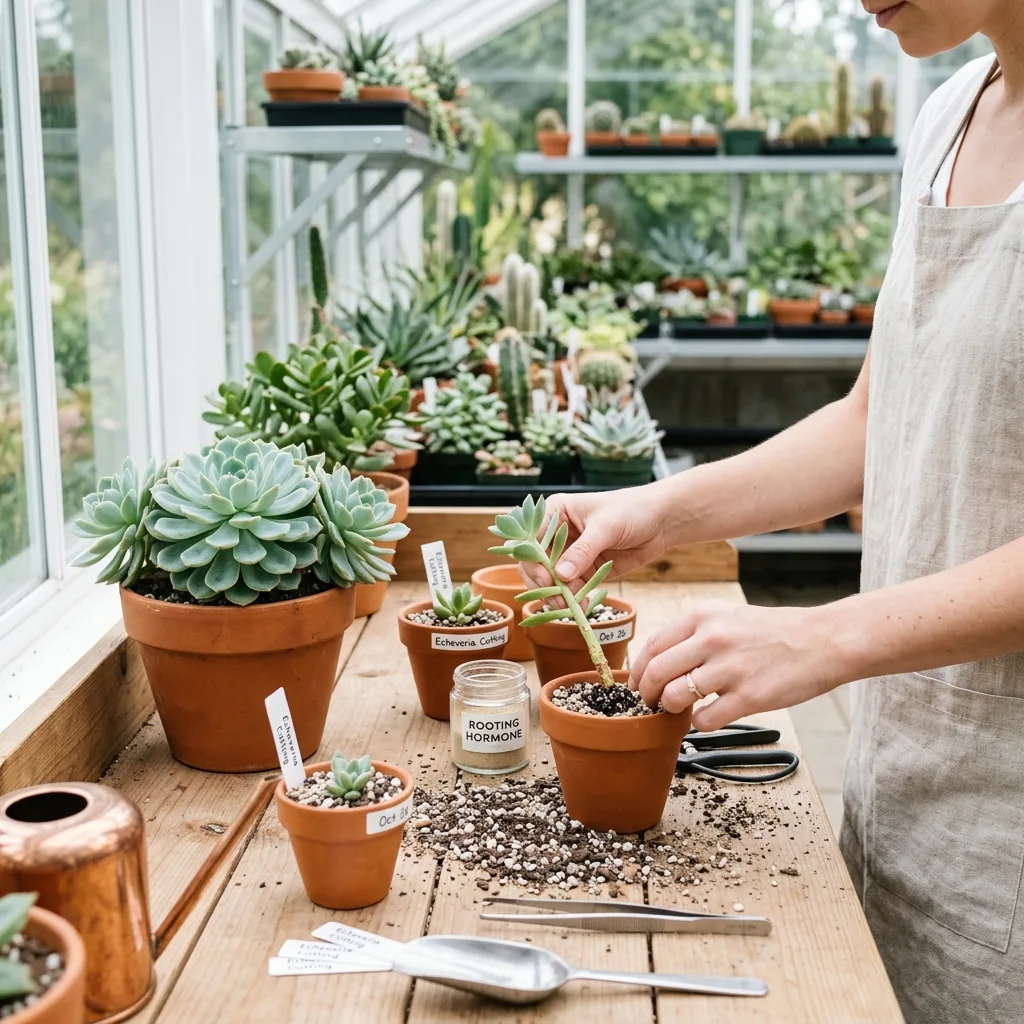
Propagating Vernonia amygdalina is exceptionally reliable through semi-hardwood stem cuttings taken in late spring or mid-summer when the mother plant is actively producing new vascular shoots:
- Select a healthy, vigorous stem approximately pencil-thick with at least 3 to 4 nodes. Make a clean cut at a 45-degree angle just below a node using sterilized shears.
- Carefully strip away the leaves from the bottom two nodes to minimize transpirational moisture loss, leaving only the terminal pair of leaves intact.
- Submerge the lower node in clean, lukewarm water or insert it directly into a pre-moistened nursery mix of 70% perlite and 30% peat moss.
- Place the cutting under bright, indirect ambient light at a steady 22°C–26°C. Maintain elevated localized humidity using a transparent humidity dome or clear perforated bag. Adventitious roots typically establish within 14 to 21 days.


Reader Reviews & Comments 3 Reviews
Eleanor Vance
Marcus Thornton
Sophia Bennett
Leave a Review & Rating
Share your plant care tips, experiences, or questions with our succulent community.